How Casino Scenes Use Atmosphere to Serve the Story
Casino scenes use atmosphere to steer attention: learn how light, camera position and selective detail make a fictional table serve its story.
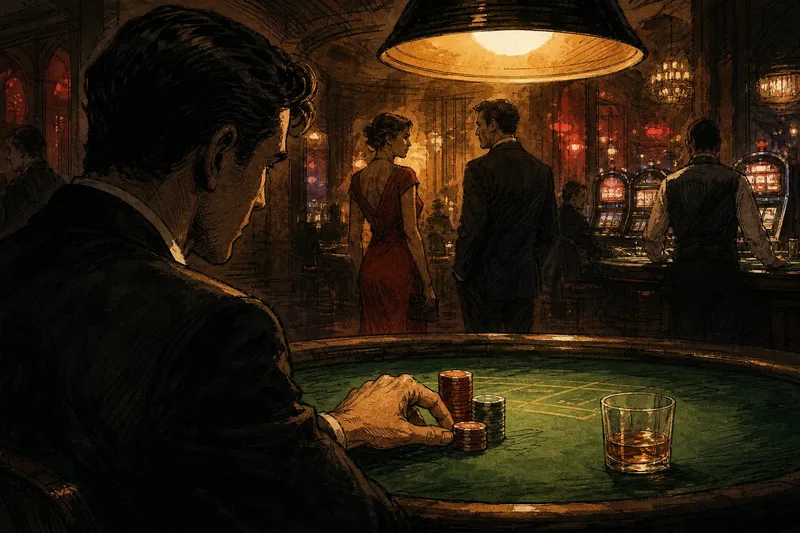
A strip of green felt glows beneath a low lamp while the rest of the room dissolves into shadow. In a casino scene, that choice can tell you more about a character’s isolation, confidence or danger than a full view of the tables ever could. To read casino scenes, watch how lighting, camera position and selected details guide your attention.
What does atmosphere do in a casino scene?
Atmosphere is the feeling created by a scene’s visual and sound choices. It is not a faithful inventory of a casino floor. A film or television sequence may compress a sprawling room into a few tables, a doorway and a face caught in coloured light, because the story needs a particular mood rather than a complete record.
That mood can shift within a scene. A bright, open shot may make the room feel sociable; a tighter view and harsher contrast can turn the same setting into a private trap. The casino becomes part of the storytelling, not merely a backdrop for cards or chips.
How does lighting shape the room?
Lighting decides what the audience sees first and what stays uncertain. Warm pools of light can make a table feel intimate, while deep shadows around its edge suggest that the character is cut off from the wider room. Glare on polished surfaces may create visual bustle without requiring the camera to show every person present.
Colour carries its own associations, but it is not a fixed code. Red can feel festive, threatening or simply decorative depending on the surrounding image and the scene’s pace. Notice whether the light changes when a character enters, makes a choice or realises something; the shift may mark a change in the story’s emotional temperature.
Sound works alongside illumination. A subdued wash of conversation and clinking chips can make a close-up feel private, while a sudden reduction in background noise can isolate a character’s decision. The scene does not have to reproduce the full acoustic life of a casino to make the moment legible.
Where does the camera place you?
Camera position shapes the audience’s relationship with the action. A view from above can make people seem small within a system; a low angle may lend a player temporary command. A camera at table height can keep the felt prominent and make the exchange feel immediate, while a distant frame invites the viewer to notice the room’s social patterns.
Movement matters, too. A slow approach towards a player can build anticipation, but a quick cut to another person may reveal that the important event is not the hand at all. A shot held on someone watching from the edge of the table can turn the audience’s attention from play to power, loyalty or suspicion.
Think of a camera frame as a picture window: it shows a chosen slice of a larger place, not the whole building. The edge of the frame is an active decision. Ask what has been left outside it, and whether that absence makes the scene feel intimate, unstable or suspicious.
Which details carry the story?
Selective detail gives a casino scene texture without making it a tour. A dealer’s hands, a chip resting near a character’s fingertips, a mirrored wall or a half-empty glass can all direct attention. The detail earns its place when it tells us something about the person, the social setting or the coming turn in the story.
Objects can also work as visual punctuation. A chip pushed forward may make a decision visible; a hand withdrawn from the felt can suggest hesitation. Neither gesture explains the rules of a game by itself, and the scene need not pause to teach them. Its priority is to make the dramatic choice readable.
For a useful reading, separate what the scene shows from what it asks you to infer. A close shot of a player’s fingers might signal tension, but it does not prove that the character is losing control. The surrounding performance, editing and later events help determine whether that gesture is a clue, a feint or simply a moment of emphasis.
How can you read a casino scene without mistaking it for a real game?
Why does a film show only a few people at the table?
The scene may be concentrating on a relationship or decision rather than depicting a typical room. A sparse frame gives the performers space and lets viewers track expressions and gestures without competing detail.
What does a close-up of chips usually communicate?
It makes a small object carry dramatic weight by separating it from the surrounding action. The meaning depends on context: the chips may signal confidence, temptation, status or a character’s attention to the stakes.
Can camera angles tell you who has control?
They can suggest power, but they do not settle it. A low angle may make someone appear dominant for a moment, while an opposing shot or a change in performance can unsettle that impression.
Why might the game itself seem hard to follow?
The edit may favour suspense, character reactions or plot clarity over a complete account of the rules. Treat the sequence as shaped storytelling unless the production clearly gives the game’s mechanics a central role.
What should you notice in a worked example?
Say you are watching an invented scene in which a character sits at a blackjack table before meeting an old friend. The opening frame keeps the character small beneath amber lights; as the friend appears, the camera moves closer, but the dealer and cards stay out of focus. The expected observable result is that the reunion feels more important than the hand, even though the casino remains the setting.
Now consider how the same scene would change if the camera stayed wide and followed the dealer instead. Attention would move towards the table’s activity and the character’s place within it. That contrast helps identify the director’s choice: framing can make the game central, or use it as a stage for another encounter.
How can atmosphere be separated from casino reality?
Compare the scene’s purpose with its visible details. If every light, sound and gesture points towards one character’s emotional turn, the sequence is probably organising the setting for narrative clarity. A real gaming floor has routines and activity that may not matter to the plot, so a fictional scene can omit them without claiming to document the full experience.
That distinction also keeps interpretation grounded. Avoid treating a dramatic pause, a striking colour or an unusual camera angle as evidence about how casino games normally work. These are choices in a crafted image. The most revealing question is not whether the shot captures an ordinary visit, but what it helps the audience notice about the story.
Next time a casino appears on screen, follow one visual choice from beginning to end: where the light falls, what the camera excludes, or which object receives a close-up. For casino scenes, that small act of attention often reveals the difference between a room used as decoration and one shaped to carry the story.