Why a Near Miss Is Not a Signal
Learn why a near miss is not a signal, how to read the outcome, and what to do before another independent chance-based game.
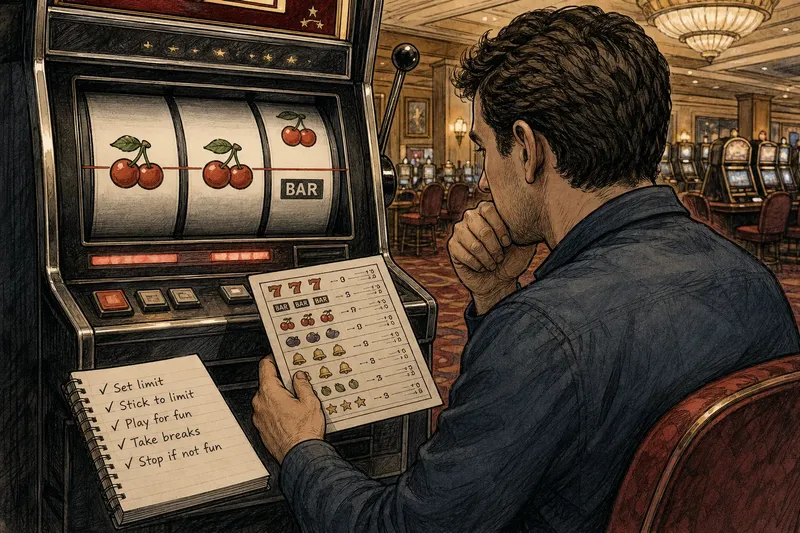
The reels stop with two cherries in a row and a third just above the payline. A near miss can feel like a message from the machine: surely the next spin is closer to paying out. But in a game where each result is independent, that almost-win does not make the next result more likely to match your hopes.
What counts as a near miss?
A near miss is an outcome that looks close to a winning combination without meeting the game’s actual win conditions. On a slot machine, that might mean matching symbols separated by one position; in another game, it could be a result just short of a target.
The closeness is visual or emotional, not a partial win unless the rules explicitly award something for it. A symbol sitting just above a payline does not count as though it were on the line. Check the paytable and winning combinations to see what the game actually recognises.
What should you do after seeing one?
Pause before making another bet. Treat the result as complete: the game produced an outcome, it did not reveal what comes next. That simple distinction helps separate the event you saw from the prediction your mind may be making.
- Name the result. Describe what happened in plain terms, such as “two matching symbols, no winning line”.
- Check the rules. Use the paytable or game information to confirm whether the outcome pays anything.
- Notice the thought. If you catch yourself thinking “it’s due” or “that was nearly it”, recognise that as an interpretation, not evidence about the next result.
- Decide whether to continue. Use the limit you chose before play, rather than raising it in response to the near miss.
- Step away if the urge grows. A break can give you space to make a deliberate choice instead of reacting to the display.
Say you set a modest session limit before sitting down, then see two matching symbols miss the line. You check the paytable, confirm it is not a win, and stick to the limit you already chose. The observable result is a clear decision about whether to continue, rather than a new bet based on the idea that a win is approaching.
Why does “almost” feel so persuasive?
People are quick to notice patterns and to imagine how an outcome could have been different. A near miss makes the unrealised win easy to picture: one symbol, one position, one small change. That vivid comparison can make the result feel more meaningful than an ordinary loss.
Game displays can sharpen the impression by placing symbols close together or presenting a result with dramatic timing. Yet appearance does not change the game’s rules. Think of a near miss like a letter that almost fits a word: its closeness does not make it the letter that was needed.
How does independence change the next result?
When outcomes are independent, a previous result does not influence the next one. If a machine’s next spin is generated separately from the last, a near miss supplies no information that makes a particular symbol or winning combination more likely on the next spin.
This is different from a situation where the available options genuinely change as events unfold. A shuffled deck, for instance, has cards removed as they are dealt, so its remaining composition changes. The relevant question is not whether an earlier event looked close, but whether the game’s actual mechanism makes earlier outcomes affect later ones.
For a particular game, the rules, manufacturer’s information or local requirements may explain how outcomes are generated. If that detail matters to your decision, consult the game information or a qualified gambling-support professional; do not infer the mechanism from a display alone.
What questions help you read a near miss?
Does a near miss count as a win?
Only if the game’s stated rules award a prize for that exact result. Otherwise, an outcome that looks close is not a winning combination.
Does a near miss make a win more likely next time?
Not when the next outcome is independent of the last. The previous result may feel suggestive, but it does not improve the odds of the hoped-for result.
Why do games show outcomes that look close?
Displays may present symbols in ways that make outcomes easy to read and emotionally vivid. The visual arrangement does not, by itself, tell you what will happen on a later play.
Should I keep playing after a near miss?
That is a personal choice, not a prediction the near miss can answer. Consider your pre-set limit and whether you still want to play without expecting the next result to compensate for the last.
How can you keep the feeling separate from the decision?
Use neutral language when you describe the outcome: “no win”, rather than “nearly a win”. The second phrase is understandable, but it can quietly turn a loss into a forecast. Then return to the decision you would make if the symbols had appeared in a less dramatic arrangement.
If gambling starts to feel difficult to control, stop playing and consider speaking with a trusted person or a gambling-support service in your area. A near miss is not a signal, and it need not set the pace for what you do next.